The Genesis of the SDG Generation: Translating Awareness into Action
From the Desk of the President, VKF
The Genesis of the SDG Generation: Translating
Awareness into Action
The world has reached a critical juncture in the pursuit of the Sustainable Development Goals
(SDGs). As a global think tank of diverse change champions, Vision Karnataka
Foundation (VKF) recognizes that achieving the 2030 Agenda requires moving beyond mere
cognitive awareness to forging deep, actionable commitment. This was the central focus of
our inaugural VKF Sustainable Development Goals (SDG) Summit 2025, held on October
10, 2025, at the Sir M V Auditorium in Bengaluru.

The urgency articulated at the Summit underscores a profound shift: our focus lies in
Karnataka, but our eyes are firmly set on the globe. VKF is now at a juncture where we
are moving decisively from developing the Karnataka model to advancing global action.
Attended by over 350 participants, including representatives from 23 colleges, 15 NGOs,
and 16 corporates, the Summit operated on the clear mantra: Awareness, Alignment,
Action. It was an event designed not just for dialogue, but for catalyzing commitment to
UNSDGs through a collaborative ecosystem of Academia, Corporates, and NGOs.

Reflection on the ‘Triangular Connect’
For enduring change to take root, especially in Karnataka where our focus lies, we must
establish robust partnerships. The true strength of the Summit lay in bringing together the
three critical pillars of sustainable development: Academia as the knowledge ecosystem,
NGOs as grassroots implementers, and Industry as innovation partners.
I was profoundly encouraged by the contributions from all stakeholders:

∙Industry and Corporate Alignment: Ms. Uma Reddy, President of FKCCI,
demonstrated immediate solidarity, extending support for our newly launched Youth
Clubs and suggesting integration with competitions like Manthan to leverage project
outputs for startup funding. This directly links academic efforts to our core mission
of mass entrepreneurship.
∙Global Context and Policy: Mr. Abhishek Ranjan from UN GCNI underscored the
need for institutional partnerships to anchor SDG initiatives, while emphasizing the
global urgency, noting that progress towards the SDGs is severely off track.
∙Academic Connect and Reform: Ms. Aisshwarya DKS Hegde, Trustee Secretary
of the National Education Foundation, profoundly steered the conversation towards
sustainability as a moral imperative. She stressed that the true definition of
sustainability revolves around the "need of the world and not as for the greed of
the world". Critically, she urged that for this change to take root, the entire ecosystem
must train faculty and youth to drive change. She further extended her full support
to the VKF SDG Youth Clubs initiative.

∙The Youth Catalyst: Perhaps the most inspiring moment came during the panel
discussion on Inclusive Technologies for Decent Work & Green Future. The
spirited participation of Master Nayan Aditya, the 11-year-old founder of
NGreenTech (e-waste management), was a powerful reminder that age is no factor
to be aligned to SDGs. His presence motivated the audience, proving that
entrepreneurship is a viable path for self-innovation and participation in the SDG
journey.
Leveraging Research for Action
Our belief is that knowledge must translate into practical solutions. The Pan-India Research
Paper Competition was an essential component, attracting 70+ submissions. The 36
selected papers for ISBN publication were released during the inaugural session.
It was my honor to award a cash prize of INR 10,000/- to the authors of the top five papers.
These presentations addressed critical themes directly relevant to VKF’s work, such as FPOs
(Farmer Producer Organizations) for Sustainable Agriculture and Soil Health and Food
The research highlighted the need for rigorous, structured frameworks, echoing the call from
Mr. Raghuram for adopting structured systems (e.g., Swiss/European models) for SDG
projects to ensure they are scalable and accountable.
The Path Forward: Institutionalizing SDG Action
The true legacy of the Summit is not the day itself, but the commitment we made to
institutionalize this movement: the official launch of the VKF SDG Youth Clubs.
VKF has placed a significant focus on SDG 8: Decent Work and Economic Growth,
believing it is the foundation for holistic and inclusive development. The Youth Clubs are
the mechanism through which we will empower engineering and management students and
faculty to become agents of change.
These clubs will serve as the bridge between academia, civil society, and industry,
ensuring that students undertake SDG-based academic and field projects, facilitated by
mentorship and access to real-life NGO projects. We will strongly encourage institutions
to prioritize SDG thematic areas for internships.
This mechanism aligns seamlessly with VKF’s extensive grassroots efforts—from the Yuva
Shakti Mass Entrepreneurship Initiative aimed at empowering 5 lakh youth to our Cluster
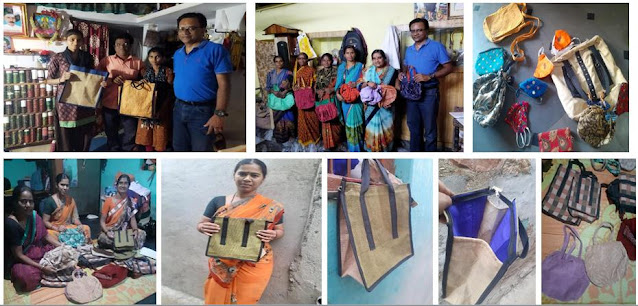
Development Programs in Jute, Maize, and Cashew. By funneling the energy and
innovation of these future leaders through the Youth Clubs, we ensure that applied research
and innovation align directly with the real community needs and the goal of creating
decentralized, innovation-driven local economies.
Acknowledging the Pioneers of the Youth Clubs
The success of launching the VKF SDG Youth Clubs would be impossible without early
adopters ready to integrate our model of Academia, Corporates, and NGOs collaboration.
Therefore, I must specifically acknowledge and thank the institutions that have taken the lead
∙Indus Business Academy (IBA): Dr. Nandeesh V Hiremath, Professor & Dean,
Indus Business Academy, played a pivotal role, chairing the key panel discussion on
Inclusive Technologies for Decent Work & Green Future.
∙Ramaiah University of Applied Sciences (RUAS): RUAS demonstrated leadership
not only through the chairmanship of the Technical Session by Dr. K. M. Sharath
Kumar, but also through their strong participation in the Pan-India Research Paper
Competition, which received over 70 submissions, with award-winning papers
coming from their institution.
∙Nitte Meenakshi Institute of Technology (NMIT): NMIT is an important partner in
our academic collaboration ecosystem and has previously demonstrated a strong
commitment to fostering innovation and emerging trends through collaborative
gatherings.
The dedication of leaders within institutions like IBA, RUAS, and NMIT ensures that we can
fulfill the promise of turning academic excellence into applied innovation, creating the SDG-
relevant talent necessary to build sustainable, prosperous, and ethical local economies.
We are committed to building a generation that not only understands the SDGs but lives
by them. The Summit was just the beginning; the hard work of Alignment and Action starts
now on campuses and in communities across Karnataka.
Kishor Jagirdar President, Vision Karnataka Foundation


Comments
Post a Comment